
Think Big Not Small: How Civil Society is Driving Big Changes for Climate Accountability
Big Changes Can Start Small, and the Pacific Islands are Proving It
On 23 July 2025, during a watershed moment, the International Court of Justice (ICJ) released a unanimous advisory opinion that recognises addressing climate change as a legally binding obligation under the United Nations (UN) treaties. This means that states can now hold each other accountable for damages induced by climate change – a significant win for small island developing states (SIDS) and other vulnerable nations, who can now negotiate for reparations from polluting countries. This comes after years of campaigning, initiated and led by a group of 27 students from Fiji who successfully rallied the Pacific Islands Forum and the government of Vanuatu (backed by 105 countries) to take the issue to the ICJ – putting significant pressure on the world’s highest court to support systemic change of the international climate accountability system. While the advisory opinion is not binding on states, it is binding on UN bodies and simultaneously puts an international spotlight on countries that are unaligned in the fight against climate change. As such, countries like the United States of America (USA), while no longer party to the Paris Agreement, are still expected to deliver on obligations under customary international law.
Importantly, the court also specifically addressed mitigating fossil fuels, stating that “fossil-fuel production, consumption, the granting of exploration licences or the provision of subsidies may constitute an internationally wrongful act attributable to the state or states involved.” Knowing that they may be eligible to pay for climate-induced damages, big polluters may now be incentivised to amend their national legislation and implement more stringent measures and penalties for breaches of climate law. With vulnerable nations now driving forward an accountability framework and repercussions for fossil fuel investments, countries may feel pressured to transition to low-carbon economies as soon as possible. The advisory opinion also confirmed that the maritime zones of countries would not be affected by rising sea levels, allowing SIDS to retain their territorial rights despite many of their islands currently disappearing.
The ruling by the ICJ signals many wins for the fight against climate change, but importantly showcases how a small group of civil society actors can be the catalyst for big changes within the international climate justice architecture and beyond. Understanding that civil society are not just beneficiaries of climate finance and policy decisions, but are key partners in ensuring fair, equitable and ambitious commitments to climate action is crucial to developing robust climate accountability frameworks that can accelerate implementation of the Paris Agreement. This understanding is at the heart of the Green Accountability Platform, a multi-stakeholder initiative launched by the World Bank’s Global Partnership for Social Accountability (the predecessor of the Civil Society and Social Innovation Alliance) in partnership with the World Resources Institute, Huairou Commission, and SouthSouthNorth. The Platform is supporting 25 Civil Society Organisations (CSOs) across Brazil, Mexico, Senegal, Cameroon and Bangladesh working on the front lines of climate action to develop their networks to leverage citizen voice and accountability, with the aim of building systems to enhance the quality, effectiveness, and equity of climate finance. These organisations are driving forward accountability mechanisms and policy shifts that support both the needs of vulnerable communities and national development priorities. As such, the Platform is showcasing how CSOs, many of whom are embedded in the climate realities of their countries, can be levers of change for more accountable and robust climate policy and finance frameworks.
Strengthening community voices for enhanced accountability of carbon market and REDD+ projects in Acre, Brazil
In Brazil, jurisdictional Reducing Emissions from Deforestation and Forest Degradation (REDD+) programmes have and continue to be a core source of climate finance for subnational governments, particularly for those situated close to or within the Amazon region. In contrast to project-based programmes, these programmes are largely financed through public or concessional finance, are implemented by the government over large areas of land and are linked to national policy implementation. While these programmes are aligned to the country’s climate commitments of reducing deforestation, in practice, the allocation of finance is often unaligned to the programme’s core objectives.
Instituto Fronteiras, an NGO situated in the State of Acre, in the heart of Brazil’s Juruá region, is leading advocacy efforts to ensure the safeguarding of Indigenous communities’ rights in jurisdictional carbon market and REDD+ projects. REDD+ is a United Nations-backed climate mitigation framework designed to financially incentivise developing countries to reduce greenhouse gas emissions from deforestation and forest degradation. These projects have often bypassed community consultation and have lacked equitable benefit-sharing mechanisms, meaning that local communities often have not been compensated for, despite the programmes taking place on the very lands where they live. With support from the Green Accountability Platform, Instituto Fronteiras is successfully carrying out various strategic actions focused on strengthening the participation of local communities in climate finance debates, particularly within the context of Acre’s Carbon Environmental Services Incentive Programme (SISA Carbon Programme) (Brazil’s first jurisdictional REDD+ programme).
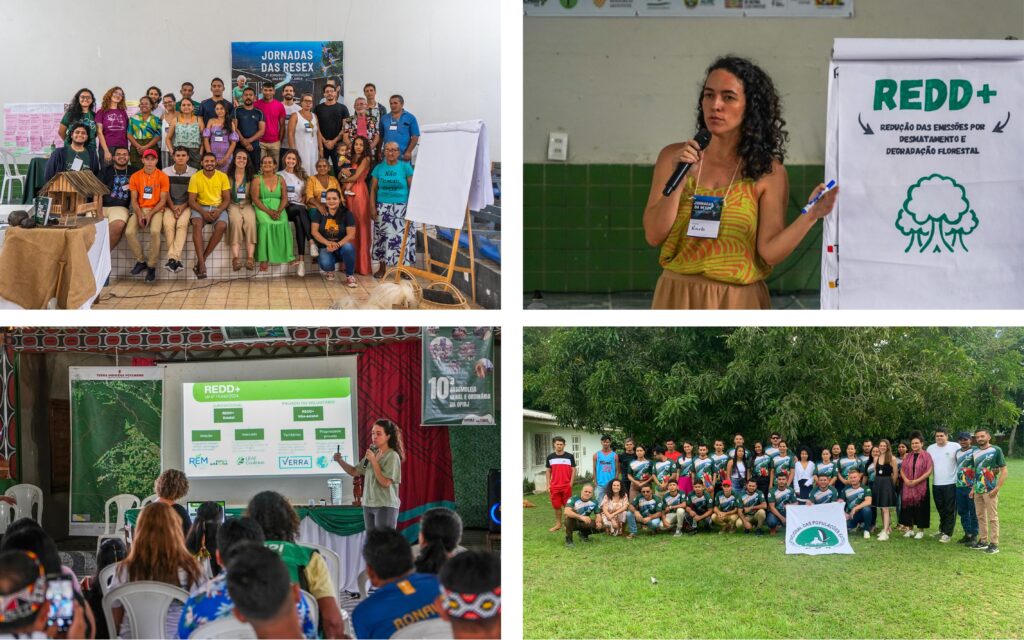
Advocacy efforts and community consultations in Juruá. Courtesy of Instituto Fronteiras.
For example, in 2024 and 2025, Fronteiras undertook a series of consultations with local stakeholders, including the National Council of Extractivist Populations (CNS) and the Indigenous Peoples of Juruá (OPIRJ), to discuss the government’s proposal to sell Acre’s carbon credits through the Leaf Coalition – a public-private partnership intended to mobilise finance needed to protect tropical forests. These consultations found that none of the local communities were made aware of the government’s intention to shift from public to private funding for the SISA Programme. This switch from donation-based funding to carbon market-based financing would ultimately restrict local communities from selling their own carbon credits due to double-counting of emission reductions. As a result, OPIRJ drafted a letter demanding consultation of Indigenous peoples on the government’s plans for financing the SISA programme. Following this, Instituto Fronteiras was invited to participate in the SISA Evaluation and Monitoring Commission meeting held in November 2024, where the issue was brought forward to state entities. A set of recommendations was also developed and published on 1 April, advocating for Free Prior and Informed Consent (FPIC) of traditional communities and Indigenous Peoples of Juruá within the scope of the SISA Carbon Programme and the Leaf Coalition. This was an essential step forward to ensuring that any initiative related to jurisdictional carbon markets respects the rights and autonomous decision-making processes of the communities involved. In addition to these advocacy efforts, Instituto Fronteiras is currently developing a database of jurisdictional and private REDD+ projects for the State of Acre that will evaluate projects against several equity indicators, e.g. prior consultation with communities, land tenure regularisation and social and environmental safeguards, among others.
Through the Green Accountability Platform, other small CSOs are also showcasing how intentional and strategic efforts that are driven by an understanding of local social and environmental contexts can enhance accountability frameworks and initiate greater oversight in environmental legislation. For example, in Cameroon, SAILD is capacitating Indigenous Peoples and Local Communities (IPLCs) to evaluate the implementation of the Nationally Determined Contribution (NDC) and the National Climate Adaptation Plan (CCNAP). Through strategic engagement with local actors, a national strategy for the involvement of civil society and IPLCs will be developed, enhancing accountability frameworks for national policy development processes. At the sub-national level, CIPCRE is promoting accountability in the planning, monitoring and budgeting of decentralised authorities through the establishment of Citizen Community Observation Platforms (OCCAP-Clim) to facilitate formalised feedback loops on climate change needs and concerns between communities and government.
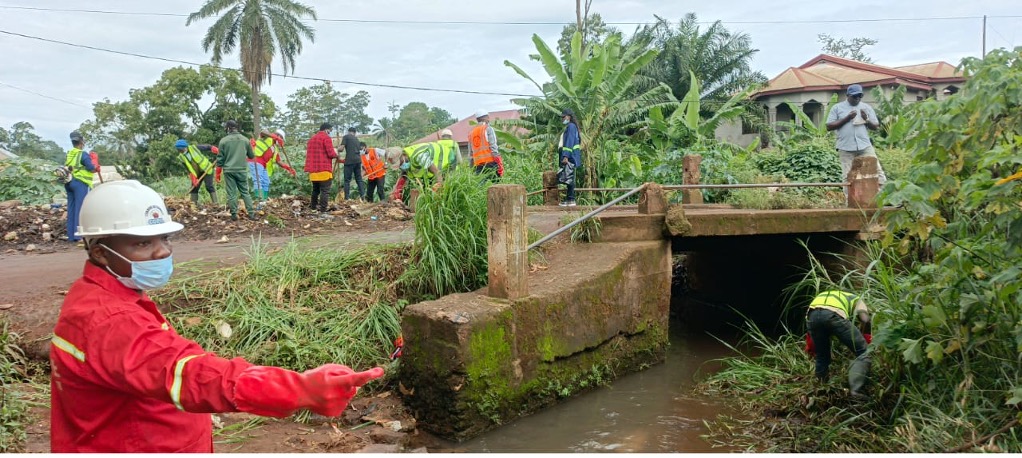
Citizen monitoring of municipal investments related to the consideration of climate risks. Courtesy of CIPCRE.
While these projects are ingrained within very local contexts, their positioning for better inclusion, oversight and participation in climate policy and finance decisions aligns with international solidarity efforts for more robust climate accountability frameworks and can be scaled. Upcoming multilateral fora like the World Bank annual meetings in October and COP30 in November signal strategic and important opportunities to build on the momentum created by the ICJ ruling, for better governance, transparency and participation in climate finance processes.