
Lessons from the Green Accountability Platform
Enhancing transparency, inclusion, and accountability in climate finance
On 3 February 2025, SSN hosted a webinar under the Green Accountability Platform to share key lessons from civil society actors across Bangladesh, Cameroon, Mexico, Senegal and Brazil that are working to advance the accountability of climate finance within their local contexts.
The webinar also served as the official launch of two new flagship knowledge products – a policy brief on ‘Strengthening the role of civil society actors in climate finance’ and a case study booklet on ‘Enhancing transparency, inclusion and accountability in climate finance: stories from Bangladesh, Brazil, Cameroon, Mexico and Senegal’. From training local communities to access environmental data and lobbying for data-driven decision-making in Brazil, to enhancing community participation in Just Transition financing discussions in Senegal, the projects highlighted the importance of civil society in enhancing the transparency, inclusion and accountability of climate finance.
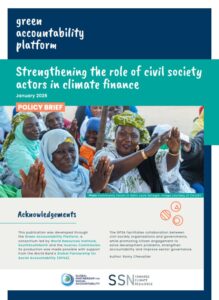
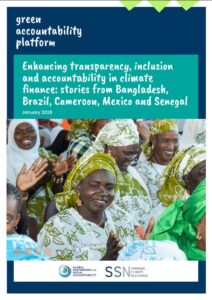
These case studies and policy recommendations are captured in two flagship publications. The case studies provide practical examples of successful bottom-up approaches that strengthen the credibility of policy recommendations for more transparent, inclusive, and accountable climate finance, while also identifying the specific types of support that civil society requires to meaningfully participate in climate finance decisions.
Key messages
Current geopolitical tensions call for enhanced accountability and transparency in climate finance
Josh Ogada, Director at SSN, emphasised the need for greater accountability and transparency, noting that current climate finance commitments are falling short. He noted that we are currently facing an era of heightened geopolitical tensions, as countries are turning to more competitive, protectionist strategies amid a shrinking development finance landscape. In addition, less attention has been paid in recent years to how this finance is channelled, how it is governed, and who has a say in decisions regarding its disbursement. As such, there is a need to assess the extent to which climate finance is managed with transparency, participatory decision-making, and accountability, to ensure it is truly inclusive and transformative. He emphasised that green accountability could reduce the costs of climate action while empowering communities, as research shows that greater transparency and accountability mechanisms could save more than $100 billion a year in public climate finance, while ensuring equitable, affordable and effective finance provision. Through the Green Accountability Platform, civil society is strengthening transparency and accountability mechanisms in public budget and policy processes, enabling them to more effectively advocate for their needs and unlocking new and innovative climate financing. He closed by acknowledging that the lessons learnt through the Platform provide a foundation for scaling innovative approaches and for leveraging partnerships to ensure climate finance allocations are equitable, transparent, and serve those who need them most.
There is no single model for green accountability. Projects and strategies must be carefully designed and tailored to unique contexts
Romy Chevallier, Independent Consultant and Senior Researcher at the South African Institute of International Affairs (SAIIA), introduced the Green Accountability publications, stating that the objective of this research was to provide practical evidence to elevate the role of CSOs as core actors in the climate finance governance landscape. A key finding of this research was that context shapes how climate finance is accessed and governed, with each project country showcasing different degrees of openness in governance: some already have formalised mechanisms for community participation, while others do not. The extent to which gender and social inclusion are considered in climate finance allocations also varies. She gave practical examples of how the supported CSOs sought to overcome the varying accountability challenges by developing innovative and strategic interventions, such as institutionalising citizen feedback loops, developing methodologies for tracking climate finance, and creating accessible climate finance data portals, among others. She closed by emphasising the need for continued collaboration, peer learning, and platforms to ensure that CSOs’ efforts move beyond isolated projects into systemic, scalable approaches that are visible and recognised by national and international audiences.
Project spotlights
Lobbying for data-driven climate policy decision-making in Brazil
Maria Vitoria Ramos, Co-founder and Executive Director at Fiquem Sabendo, presented a project that led to changes in public policy decision-making by using the Access to Information Law (LAI) to provide evidence of current climate injustices in Brazil. This resulted in: 1) a national ban on the use of an environmentally harmful pesticide, 2) the introduction of new municipal laws to correct racial inequities in access to green spaces in public schools 3) a court ruling to extend the period for government to collect 30 billion Reals in expired fines from environmental crimes and 4) a report outlining issues of standardisation of data across subnational governments. A key success of the project was the establishment of a working group within the federal government’s Transparency Council, where a policy brief was disseminated, leading to the approval of the Escazú Agreement. This marks a significant milestone for the Green Accountability Platform, showcasing how CSOs can spearhead systemic change for more transparency and accountable climate action.
Mainstreaming gender considerations into Cameroon’s climate finance and policy landscape
Dr Zonzeiwoh Mbondgulo-Wondieh, Executive Director at Women for a Change (WfC), shared her experience on monitoring climate finance, increasing awareness, and influencing policy through a multi-stakeholder approach to advance gender mainstreaming in Cameroon’s climate finance and policy landscape. Through the establishment of a Climate Finance Action Group (CFA) and the development of a Climate Finance Manual, WfC capacitated local communities, especially women and girls, to understand climate finance and better monitor climate finance allocations in their local contexts. Through this work, members of the CFA were invited to attend national deliberations on the NDC revision- marking a significant opportunity to integrate gender considerations from local experiences into national policy processes.
Institutionalising participatory governance and budget processes in Bangladesh
Mr Nurul Alam Masud, Chief Executive at the Participatory Research and Action Network (PRAAN), shared key reflections from implementing community rural appraisals and union climate action forums in two union parishads in coastal Bangladesh. Through these participatory mechanisms, communities secured formal endorsement for union adaptation plans developed through the project, and local government representatives were simultaneously capacitated to manage climate finance expenditure. Local governments are also committed to allocating 3 to 3.5 per cent of their annual budgets to implementing adaptation plans. Through organised convenings with local businesses and civil society, PRAAN also secured funding from non-state actors to support the implementation of the adaptation plans. In December 2025, PRAAN organised a convening with the national government, during which the Secretary for Climate Change praised PRAAN’s work and emphasised the need to scale up participatory local governance and budgeting across every union in Bangladesh.
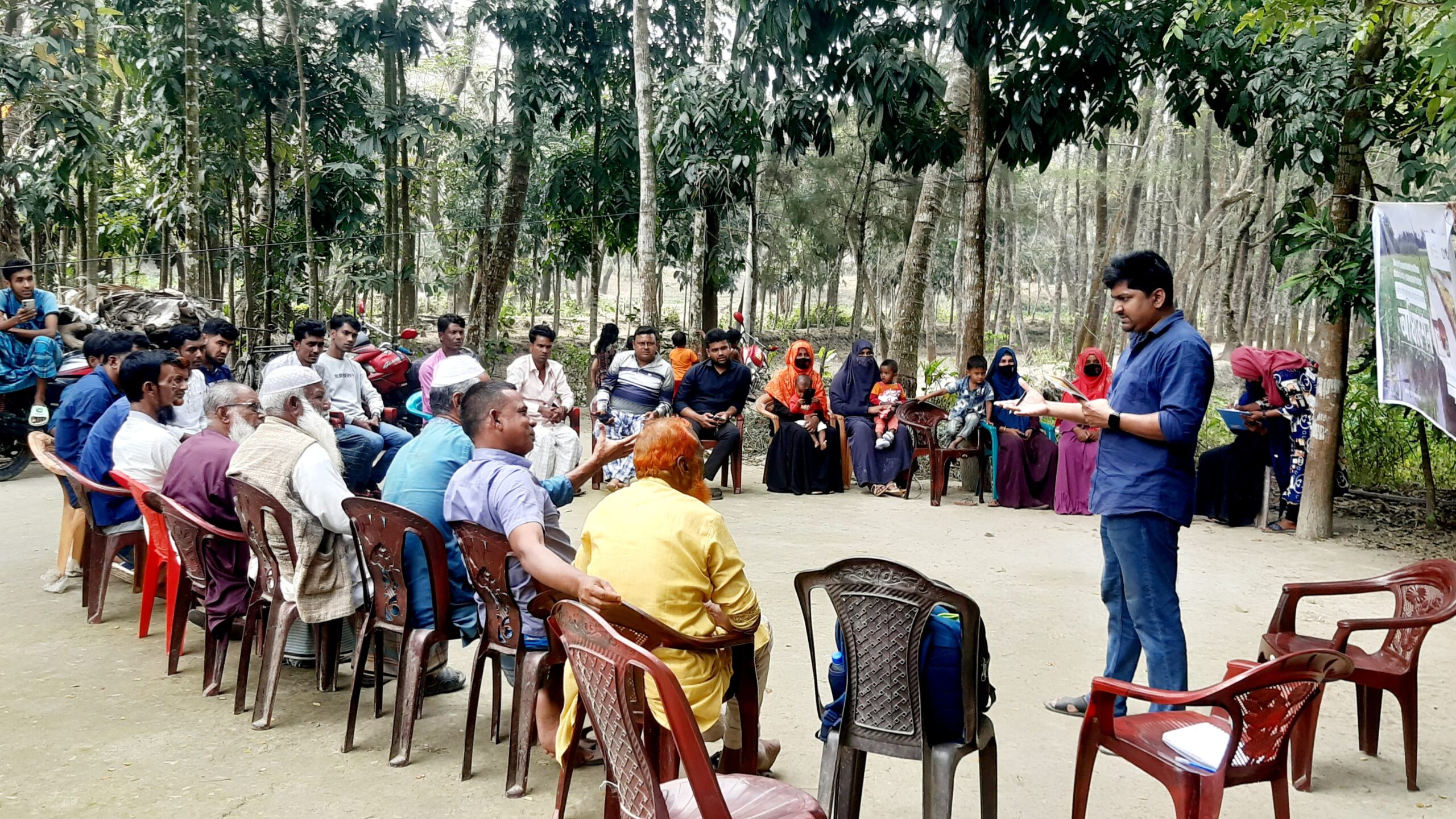
Participatory rural appraisal session in Mohammmadpur. Image courtesy of PRAAN
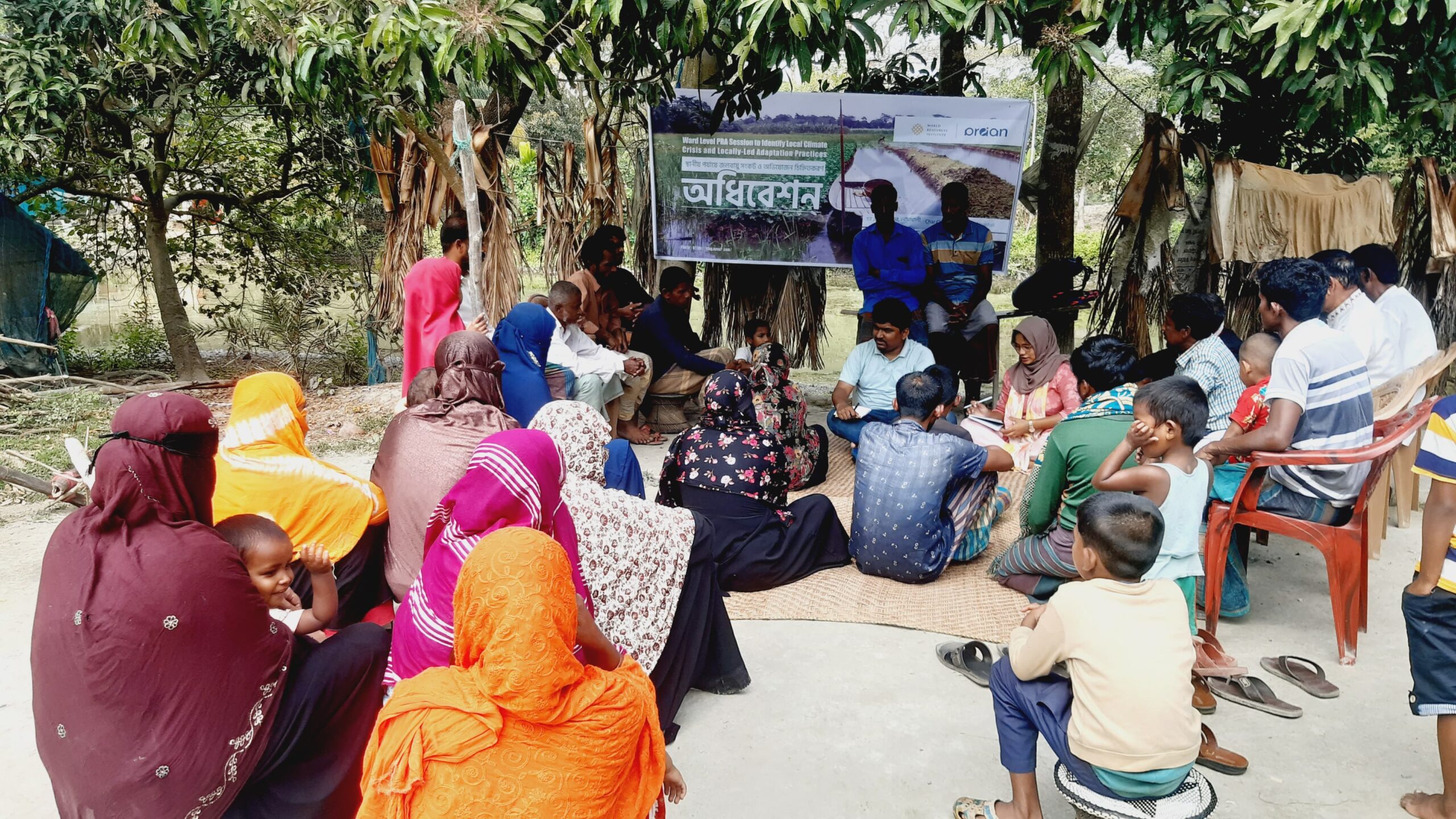
Participatory rural appraisal session in Char Klerk. Image courtesy of PRAAN
Enhancing civic participation in Mexico’s climate policies
Tzinnia Carranza, Coordinator General at Espacio de Encuentro de las Culturas Originarias, AC (EECO), highlighted the need for participatory processes to be legally binding and inclusive, noting that while Mexico has endorsed policies for civic participation, these often exclude vulnerable and marginalised groups such as women, youth, seniors, LGBTQI+ and Indigenous communities. To address this challenge, EECO developed a communications campaign that considered diverse needs, including disabilities, genders, and Indigenous languages, and trained people to participate in decision-making and to lobby for their needs. EECO also developed an interactive website for citizen participation and a methodological guide to include and engage diverse civic groups in policy processes. Mexico’s NDC 3.0 now includes provisions for binding public participation, and the methodological guide will be used as a pilot for the development of the National Adaptation Plan launched earlier this year.

Community forum for displaced persons in Saint-Louis. Image courtesy of CAJUST

Community forum in Saint-Louis. Image courtesy of CAJUST.
Looking forward
How governments and multilateral institutions can support the participation of civil society in climate finance decisions
Governments and multilateral institutions are duty bearers and must ensure that those most affected by climate change are not treated as an afterthought but meaningfully included in decision-making processes
Saad Filali Meknassi, Social Accountability and Stakeholder Engagement Specialist at the World Bank, emphasised that civic space is currently shrinking, and we are entering a moment in which truth is under attack and misinformation is rife. As such, verification of data and information is imperative, and without accountability, there can be no environmental justice. He emphasised CSOs’ ability to fill this gap by innovating and adapting quickly; however, multilateral institutions and governments must ensure these interventions are funded and scaled. In addition, the rise of Artificial Intelligence (AI) raises questions about who will benefit and who will be protected in this new digital era. While CSOs are uniquely positioned to connect local communities with state actors, strengthening green accountability capacity is needed to institutionalise these relationships and formally recognise CSO interventions. Participation must be institutionalised at all levels, and CSOs must have seats at national decision-making tables and within global fora. Governments and multilateral institutions must improve data access and set stronger disclosure standards, while ensuring alignment across policy processes. As such, governments and multilateral institutions have a responsibility to show how decisions shape outcomes. He emphasised the need to protect civic space and ensure the inclusion of women, youth and grassroots actors in these decision-making processes. He also noted the growing and important role that philanthropy will play amidst a shrinking funding landscape.
We must recognise grassroots mechanisms and CSO-driven innovations as core delivery infrastructures for climate finance
Aly Rahim, Program Manager for the GPSA and CIVIC at the World Bank, closed the webinar, emphasising that current geopolitical tensions are calling into question whether climate finance actually serves economic interests. He noted that programmes such as the Green Accountability Platform are important for providing evidence of how CSOs can be agents of change in climate finance governance decisions. He noted that we must move from a mindset of funding to one of finance, and use outcomes, such as those realised through the Greep Accountability Platform, to amplify messaging on the need for climate finance commitments that translate into actual, transparent, and equitable allocations.