Reflections on Locally Led Adaptation
What the frontlines reveal about transforming climate finance
Written by Trinidad Morán-Fajardo (Knowledge Integration & Communications Coordinator at SSN)
The Finance on the Frontlines Workshop, held in Cape Town from 21–23 January 2026 by SSN’s GA‑LLA and VCA programmes, brought together actors working to reshape how adaptation finance reaches frontline realities. Participants included SouthSouthNorth, Environmental Justice Fund, SDI Kenya and Africa, Pawanka Fund Africa and Latin America, SCAT, Humanis Foundation, Samdhana Institute, Simavi’s Water Justice Fund, Fundación Avina, ACE Observatory, BASE, Fundo Casa, IIED, and the Huairou Commission, reflecting a broad diversity of perspectives and practice.
What emerged was not only a rich exchange of experience, but a shared need to interrogate the deeper systems shaping climate finance: who holds decision‑making power, how trust is built, and what it truly means for communities to govern the resources meant for their own resilience. Rather than generating quick conclusions, the workshop surfaced patterns, tensions, and insights that point toward new possibilities for locally led adaptation, and the work still required to make those possibilities real.
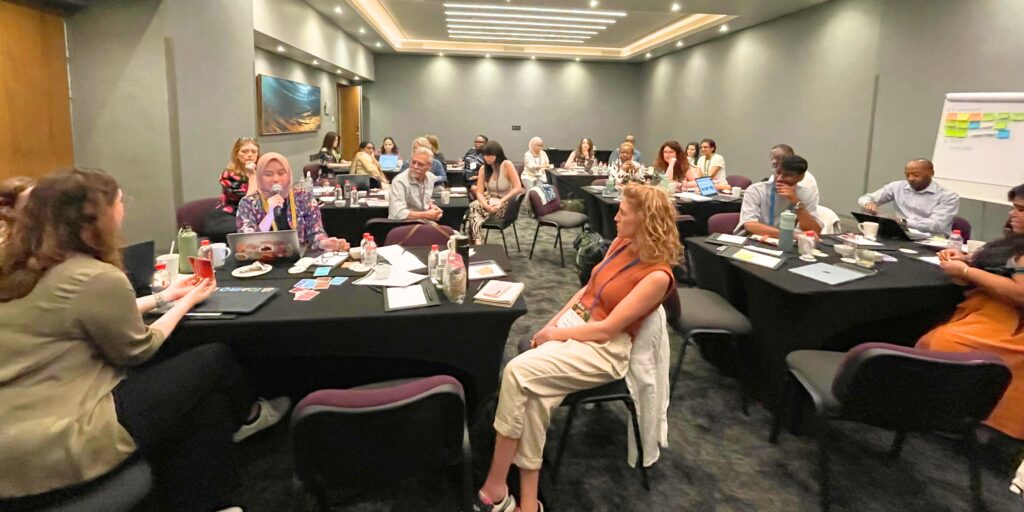
Insights on governance, learning, language, and care from cross‑regional climate actors
“It feels rare to be in a space where we’re not rushing to solutions before we’ve named the real problem.” This anonymous comment from the opening activity set the tone for the session long before any formal framing did. From the very beginning, there was a deliberate invitation to slow down, a reminder that meaningful collaboration doesn’t start with answers, but with presence.
Instead of jumping into strategies or showcasing expertise, we were asked first to listen. Expectations surfaced gently, people took time to find their words, and silence wasn’t treated as an awkward gap to be filled but as part of the work itself. Listening became a shared responsibility across the group, something active and intentional rather than passive.
Same questions, different continents
As experiences were shared from Latin America, Africa, and Asia, a strong sense of convergence emerged. Despite very different political, cultural, and institutional realities, many organisations described navigating the same fault lines. Locally rooted organisations, feminist funds, Indigenous-led initiatives, and regional intermediaries all pointed to the same paradox: even though everyone talks about and supports the idea that climate adaptation should be led by local communities, in practice, the money is still controlled by central institutions (namely donors, governments, or international organisations). These systems are cautious and conservative, so they prefer familiar actors and low-risk projects, which often limit direct access for local groups and undermine truly local leadership.
Everyone agrees local actors are best placed to lead. But the money still behaves as if that’s not true.
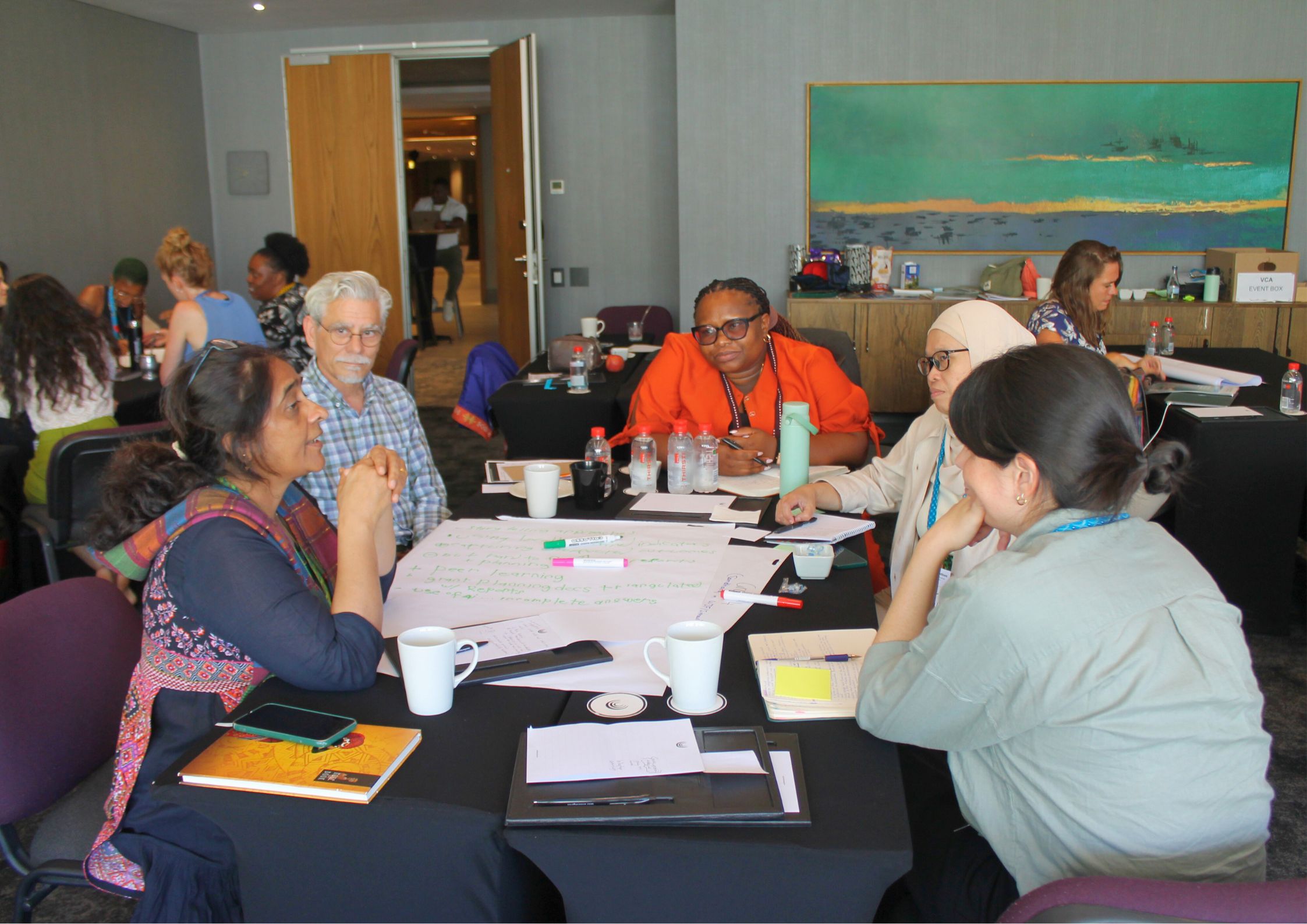
Reframing “intermediaries” in climate finance
One animated conversation centred on language, specifically, the discomfort many organisations feel with being labelled intermediaries. For many participants, the term felt not only inaccurate but politically flattening. It obscures history, erases accountability to communities, and positions organisations as neutral conduits rather than actors embedded in movements, territories, and long-term struggles.
Participants called for language that reflects trust and accountability, rather than transactional roles designed for the donor’s convenience. The consensus was clear: how we name ourselves shapes how systems treat us.
Discomfort with language opened into deeper questions about the political economy. If only a small fraction of climate finance reaches local actors directly, what happens to the rest? Organisations working across different funding models described the constant balancing act: making themselves legible to large donors while resisting the pressure to reshape their work to fit misaligned systems.
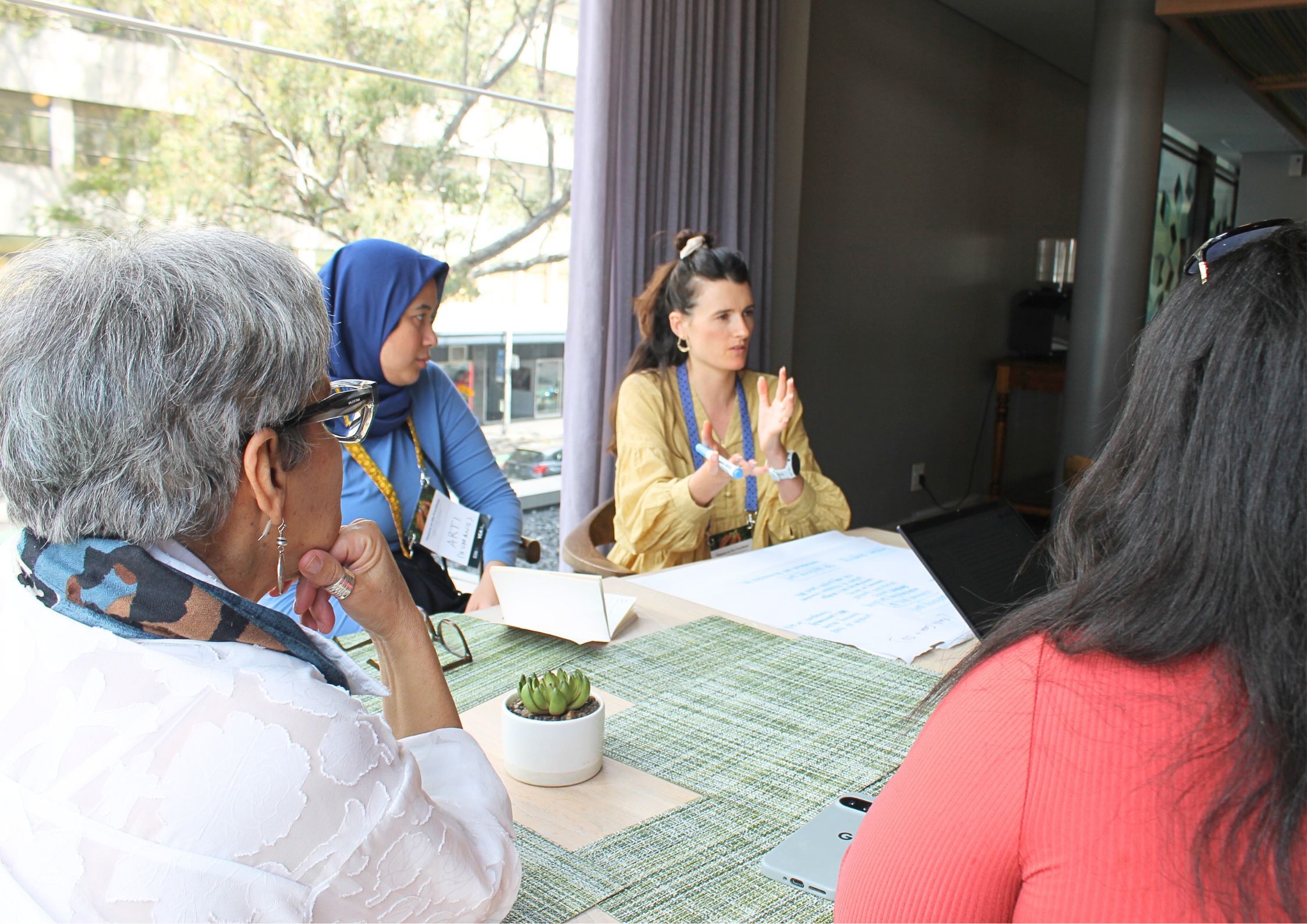
These reflections point to a shared recognition that the challenge is less about demonstrating the value of locally led adaptation, but a stronger interest in identifying real pivot points within donor systems: governance moments, reporting thresholds, or institutional incentives, where risk, resources, and decision-making could be rebalanced.
In a context of shrinking aid and intensifying competition for funds, such shifts are seen as essential to making locally led adaptation more visible, defensible, and ultimately scalable.
Risk hasn’t disappeared. It’s just been pushed downwards.
Designing funds from values, not templates
Across case studies, several initiatives were clear that they were never designed to resemble traditional climate finance mechanisms. Instead, they began with values like care, dignity, justice, and self-determination. Funding practices emerged from those foundations.
Proposals were sometimes shared through conversations, videos, or short narratives rather than complex written applications. Decision-making often sat with peers or community representatives.
Due diligence was reframed not as a compliance hurdle, but as a “needs assessment”, a way to understand what support was needed rather than a test to pass.
Our job is not to filter people out. It’s to understand what will help them thrive.
Flexibility is not a free pass
Flexibility emerged as both a shared aspiration and a source of tension. Participants were honest about the limits: how flexible is too flexible, and where does accountability sit when indicators are open-ended? Questions of sustainability complicated the picture, particularly when flexibility risks creating expectations of perpetual funding. Several organisations challenged linear narratives of growth and permanence.
Rather than offering clean answers, the group openly held these questions, recognising that messiness is often a sign of integrity rather than failure. In this sense, flexibility was not framed as the absence of structure, but as a disciplined practice, one that requires trust, clarity of purpose, and the courage to resist simplifying complex realities for the sake of fundability.
Sometimes sustainability is about knowing when to step back.
Rethinking MEL
Monitoring, Evaluation, and Learning (MEL) sat at the heart of many frustrations. Conventional MEL systems, often designed far from the contexts they measure, tend to prioritise numbers over meaning and reporting over learning.
Even in the face of other concerns or opinions, the participants were very clear and firm in their belief that learning is extremely important. The challenge lies in who learning is for, how it happens, and what is done with it.
Several organisations described shifting the reporting burden away from communities, investing instead in regular presence, dialogue, and long-term relationships. Learning took place through stories, observation, and collective sense-making rather than extractive data collection.
When MEL is done with us, it builds confidence. When it’s done to us, it drains it.
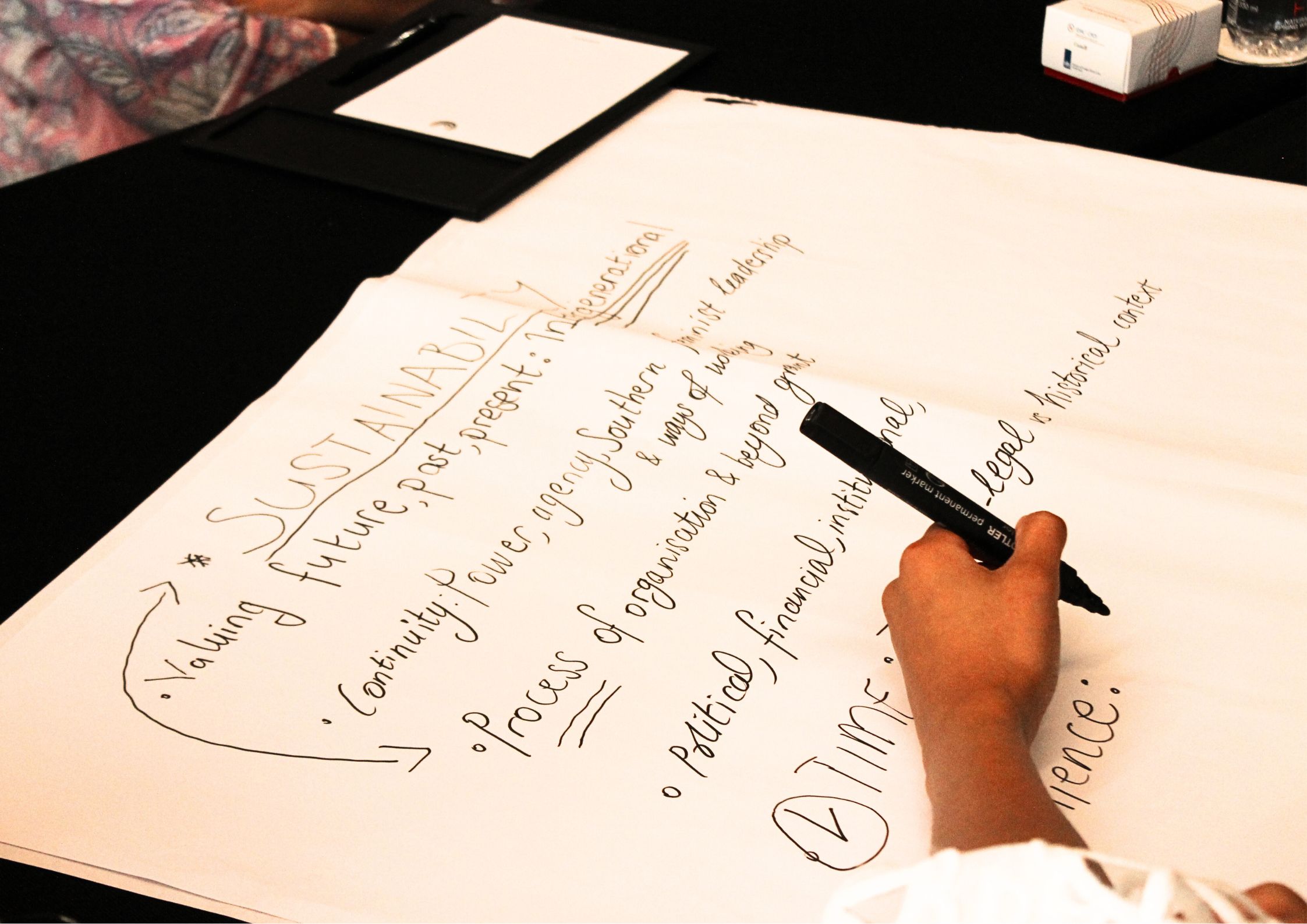
Care, accountability, and staying power
Care surfaced as a structural concern. Resilience cannot be separated from wellbeing, safety, governance, and leadership. Feminist and Indigenous-led organisations highlighted that supporting frontline climate action means supporting the humans behind it, their time, emotional labour, and right to operate without harm.
Many reflected on how rare it is to encounter professional spaces where vulnerability, honesty, and generosity of perspective are actively valued rather than quietly penalised.
As the conversation deepened, it became clear that sustainability and scale are often discussed together but rarely unpacked. For many participants, sustainability was less about permanence or growth and more about staying power: the ability of locally led efforts to continue over time, remain accountable to communities, and adapt to shifting ecological, political, and funding realities. In a context of short funding cycles and rising competition for resources, sustainability was understood as resilience, holding purpose and practice steady even as conditions change.
In contrast, scale was described in quieter, less linear terms as influence, ideas travelling through peer networks, lessons shaping policy debates, movements gaining legitimacy, and narratives slowly shifting around who leads and who decides. Several reflected that pushing for scale through rapid growth or formalisation can come at the expense of sustainability, introducing administrative burdens and donor pressures that pull work away from its roots.
Not everything that matters needs to become an institution.
Leaving with commitments, not conclusions
The final conversations resisted neat conclusions; instead of producing more evidence for its own sake, the group focused on how knowledge could remain useful, practical, and alive.
Participants were interested in developing recipes rather than reports: tools that could be adapted, tested, and reshaped by others. Advocacy grounded in relationships rather than metrics alone. Learning that circulates horizontally, not just upwards.
What lingered most strongly was the emotional texture of the space. Words like hopeful, honest, grounded, affirming, and connected surfaced repeatedly.
The underlying insight was clear; integration does not begin with frameworks or consensus. It begins with listening closely and humbly to what already exists and with the courage to design systems that honour people, movements, and the realities they navigate every day.
We’re aligned on the why. And we’re willing to struggle together on the how.