
Harnessing Artificial Intelligence (AI) To Propel A Just Energy Transition In Africa
Last week, the Development Bank of South Africa (DBSA) and the Asian Infrastructure Bank (AIIB) co-hosted the 5th Finance in Common Summit (FiCS) in Cape Town, South Africa, on the sidelines of the G20 summit. The summit brought together global leaders, public development banks, the private sector and philanthropies from all over the world to convene under the common goal of collaboration, financial innovation and advancing the Sustainable Development Goals (SDGs). The convening of this diverse set of stakeholders created a fertile environment for expert-led discussions on various cross-cutting issues related to the just transition, including artificial intelligence.
Building on work initiated under the Indian and Indonesian G20 presidencies, the session on Harnessing the Value of Digital Infrastructure and Artificial Intelligence exhibited consensus among experts in the field, all stressing the importance of rolling out AI solutions in a context-specific, responsible manner. Herein, Mariana Mazzucato, author of The Entrepreneurial State, raised the importance of pre-emptive rather than reactive measures when it comes to rolling out and governing AI solutions responsibly. She emphasised that this approach should start at the innovation process itself to ensure that AI solutions are developed in a manner that safeguards the common good.
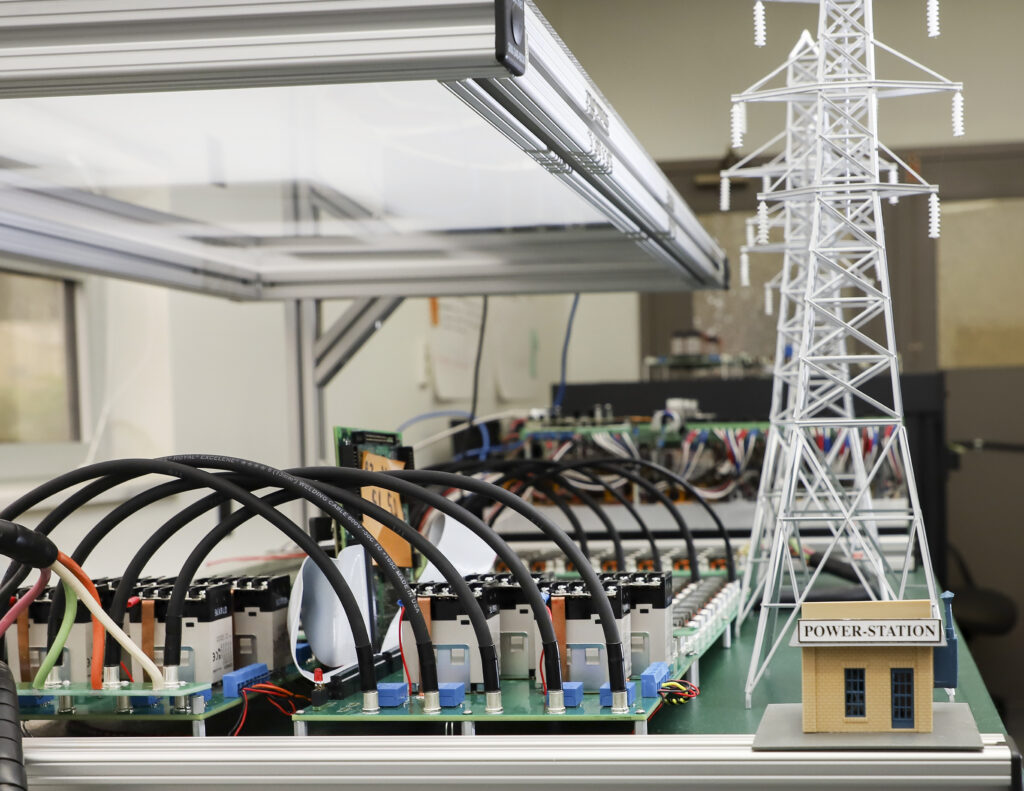
Photo: Electrical and Electrics Systems Research, courtesy of Oak Ridge National Laboratory via Flickr.
Echoing these sentiments, David Martinon, French Ambassador to South Africa, acknowledged that while AI has the potential to accelerate large-scale customisation of financial solutions and tools, this can only be achieved if solutions are tailored and relevant to the contexts of local entrepreneurs and researchers. Emphasising the importance of ensuring that AI contributes to the wellbeing of the contexts within which it may operate, Martinon expressed that, “The revolution of artificial intelligence should be first and foremost a revolution of human intelligence.”
In the latest policy brief from SouthSouthNorth’s Operationalising a Just Transition in Africa programme, authors Phatsimo Rahman and Dr Tamuka Chekero expand on these sentiments in the context of achieving a Just Energy Transition (JET) in Africa. Their perspectives resonate with the outcomes of the discussions, and the policy brief advocates for the development of strategic interventions to harness AI’s potential for a JET, emphasising the following key messages:
- AI as a catalyst for a just transition: AI can revolutionise Africa’s energy by integrating renewables, improving forecasting, and ensuring equitable distribution. This fosters a just energy transition, expands access, reduces fossil fuel reliance, and supports decentralised solutions for cleaner, resilient energy systems.
- Advancing equity and inclusion through AI: AI can advance equity in the energy sector by identifying underserved communities and enabling targeted innovations like microgrids, ensuring clean energy access for historically excluded groups. This approach addresses energy inequities and promotes inclusive growth during the energy transition.
- AI-driven capacity building for the energy transition: Investing in education and training for AI and renewable energy is vital for a just energy transition in Africa. By equipping local workforces, especially in rural areas, with relevant skills, the continent can develop a versatile workforce for AI-driven energy solutions.
- Innovative financing for renewable energy access: AI could enable new financing opportunities for renewable energy projects in low-income communities through tailored financial models like pay-as-you-go systems and blockchain investments, enhancing capital access, promoting clean energy adoption, and fostering inclusive growth in the energy sector.
- Overcoming challenges for effective AI deployment: AI offers great potential for the energy transition, but challenges like data gaps, regulatory issues, and lack of local expertise must be addressed. Collaborative, culturally sensitive approaches will ensure trusted and sustainable AI solutions. By focusing on these efforts, Africa can maximise AI’s benefits while minimising risks in the energy sector.
While AI alone cannot solve the climate crisis, it can significantly advance climate action through optimised energy systems, improved resource management, and accelerated innovation. Read the full policy brief here to learn more.